Unlock Your Paddle’s Full Potential: The Secret to Enhanced Pickleball Performance
Are you looking to gain a competitive edge on the pickleball court? Do you want to hit harder, find the sweet spot more often, and improve your overall game? The video above introduces a simple yet effective modification used by many serious players: lead tape. This small addition can significantly transform your pickleball paddle, offering tangible benefits for your play. Understanding how to use lead tape effectively is a valuable skill.
Lead tape application is a common practice among athletes. It allows for precise customization of equipment. This method fine-tunes your paddle’s performance. Many players report improved shot accuracy. Furthermore, it helps minimize mishits during intense rallies. This adjustment can truly elevate your game.
Why Customize Your Pickleball Paddle with Lead Tape?
Adding lead tape to your pickleball paddle is not merely a trend; it’s a strategic enhancement. This modification fundamentally alters the paddle’s physics. It can provide distinct advantages during play. Players often seek more power or better control. Lead tape offers a customizable solution. It caters to individual playing styles and preferences. This makes it a popular choice for serious players.
The core principle behind lead tape is simple. It strategically adds weight to specific areas of your paddle. This increased mass directly impacts the paddle’s swing weight. Consequently, it influences power and stability. Analysis shows that a slightly heavier paddle can absorb more energy. This reduces twisting upon ball contact. Such stability enhances shot consistency. Therefore, lead tape helps improve overall performance.
Boosting Power and Expanding the Sweet Spot
One primary benefit of lead tape is the potential for increased power. When you add weight, especially to the paddle’s head, you increase its momentum. This extra momentum translates into more force behind your shots. A more powerful shot travels faster. It makes it harder for opponents to return effectively. Many players seek this advantage.
Furthermore, lead tape can significantly expand your paddle’s sweet spot. The sweet spot is the optimal area for ball contact. Hits outside this zone often result in decreased power or control. By increasing the paddle’s “twist weight” or Moment of Inertia (MOI), lead tape helps. It makes the paddle more resistant to twisting on off-center hits. Studies indicate that even small weight adjustments can reduce paddle deflection by up to 10% on mishits. This means more balls stay in play. You maintain better control even on less-than-perfect contact. This makes your paddle more forgiving.
Enhancing Stability and Control on the Court
A well-balanced paddle offers superior stability. Lead tape allows players to achieve this balance. By distributing weight strategically, you can reduce paddle wobble. This is particularly noticeable when returning fast shots. A stable paddle provides a consistent feel. It gives players greater confidence in their shots. This leads to improved accuracy.
Improved control is another significant advantage. While adding weight might seem counterintuitive for control, it’s about balance. A paddle with proper weight distribution feels more “connected” to your hand. This connection allows for finer adjustments. You can place the ball more precisely. Consequently, your dinks and drops might improve. This precision is vital for advanced play. It makes your shots more intentional and effective.
Strategic Placement: Where to Apply Lead Tape on Your Pickleball Paddle
The placement of lead tape is as crucial as the decision to use it. Different areas yield different results. Understanding these effects helps you customize your pickleball paddle precisely. Experimentation is key to finding your ideal setup. Small changes can have big impacts. Consider these common placement strategies:
-
3 & 9 O’Clock Positions: Applying lead tape to the sides of the paddle, at the 3 and 9 o’clock positions, is very popular. This placement primarily increases the sweet spot. It enhances stability on off-center hits. It effectively increases the paddle’s MOI. This reduces twisting. Consequently, your paddle feels more forgiving. It also offers a slight boost in power. Many pros favor this configuration.
-
12 O’Clock Position (Top Edge): Adding weight to the top edge of the paddle (12 o’clock) significantly increases power. It puts more mass directly behind your shots. This placement can also help with put-away volleys. However, it can make the paddle feel head-heavy. This might reduce maneuverability. Players must balance power with agility here.
-
Lower Edge (Near the Throat): Placing tape near the paddle’s throat or handle can enhance overall balance. It shifts the balance point closer to your hand. This often results in a quicker feel. It improves maneuverability for quick exchanges at the net. It can also provide a feeling of increased control. This setup is great for defensive play.
Always start with small amounts of tape. Measure in half-inch or one-inch strips. Test your paddle on the court after each addition. This allows you to feel the changes. You can then adjust as needed. Remember, the goal is optimal performance for your unique game. Your personal feel is paramount. Do not rush the process.
Important Considerations and Potential Drawbacks
While lead tape offers significant advantages, it’s not without its considerations. Improper application or excessive weight can lead to unintended consequences. Awareness of these factors ensures a safe and effective modification. Balancing benefits with risks is crucial. Always prioritize your physical well-being. Furthermore, paddle integrity should be maintained.
The Risk of “Too Much Weight”
Adding too much weight to your pickleball paddle can be detrimental. An excessively heavy paddle will slow down your swing speed. This directly impacts your ability to generate pace. It can also lead to increased fatigue during longer matches. Research suggests that a 5% increase in paddle weight can decrease swing speed by 2-3%. This can negate any power benefits. Therefore, moderation is key.
Moreover, a paddle that is too heavy might feel sluggish. Your reaction time at the net could suffer. This can lead to missed opportunities. It might even frustrate your game. Finding the optimal weight is a personal journey. It requires patience and consistent testing. Prioritize comfort and agility. Do not over-do it with lead tape pickleball modifications.
Understanding and Preventing Pickleball Elbow
One of the most serious risks associated with paddle customization is injury. “Pickleball elbow,” medically known as lateral epicondylitis, is a common ailment. It results from repetitive strain and overuse. An overly heavy or improperly balanced paddle can exacerbate this condition. It places increased stress on your forearm muscles and tendons. This can lead to pain and inflammation.
If your paddle feels uncomfortable or causes strain, remove some weight. Listen to your body carefully. Proper technique is also vital in preventing injury. Ensure you are using appropriate grip sizes. Warm up thoroughly before play. Incorporating strength training for your forearm muscles helps. These practices reduce the risk of pickleball elbow. Prioritize long-term health over immediate gains. Your lead tape pickleball setup should be comfortable.
Alternatives to Lead Tape: Tungsten and Electrical Tape
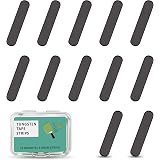
The video briefly mentions tungsten tape as an alternative to lead. Tungsten tape offers similar benefits. It is non-toxic, unlike lead. This makes it a safer option for handling. Selkirk is a known brand offering tungsten tape specifically for paddles. Many players prefer tungsten for peace of mind. It provides similar weight distribution properties. This is a great choice for customization.
Regardless of the tape type, always cover it completely. Use electrical tape to secure the lead or tungsten tape. This prevents the tape from peeling off during play. It also protects you from direct contact with lead, if using it. Proper sealing ensures durability. It maintains a smooth paddle edge. This small step is important for both safety and aesthetics. Your pickleball paddle will look professional.
Finding Your Perfect Balance: Experimentation is Key
The journey to optimizing your pickleball paddle is highly personal. What works for one player might not work for another. Professional players spend countless hours testing different setups. They fine-tune their equipment to match their unique style. You should adopt a similar approach. Treat paddle customization as an ongoing process. Your game evolves over time. Your paddle should evolve with it.
Start with small, incremental adjustments. Add just a few grams of lead tape at a time. Play several games with each new configuration. Pay close attention to how the paddle feels. Does it provide more power? Is the sweet spot truly larger? Does it feel too heavy after a long match? Document your findings. This systematic approach helps you understand the impact of each change. You will achieve optimal lead tape pickleball performance.
Dinking About Your Paddle: Your Questions Answered
What is lead tape for a pickleball paddle?
Lead tape is a small, adhesive weight used by pickleball players to customize their paddle. It helps fine-tune the paddle’s performance by adding mass to specific areas.
Why would I add lead tape to my pickleball paddle?
Adding lead tape can boost your paddle’s power and expand its sweet spot, making your shots stronger and more forgiving. It also enhances the paddle’s stability and control during play.
Where should I put lead tape on my pickleball paddle?
Common placements include the sides (3 & 9 o’clock) for a larger sweet spot and stability, the top edge (12 o’clock) for more power, or near the handle for better balance and maneuverability.
Can adding lead tape to my paddle cause problems?
Yes, adding too much weight can slow your swing, cause fatigue, or contribute to injuries like ‘pickleball elbow.’ It’s important to add small amounts and test carefully.