Imagine stumbling upon a new sport at a local park, seeing people of all ages laughing, rallying, and moving with an infectious energy. That was my first encounter with pickleball – a game that looked like a quirky blend of tennis, badminton, and ping-pong, yet possessed a charm all its own. The sheer accessibility and immediate fun factor caught my attention, and I quickly found myself eager to learn. If you’re anything like me, curious about this phenomenon or perhaps looking for a definitive guide to introduce a friend, then you’ve landed in the perfect spot. The video above provides an excellent primer, and this article aims to further equip you with foundational knowledge about **pickleball basics**, ensuring your first steps onto the court are confident and enjoyable.
Essential Pickleball Equipment for Beginners
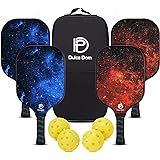
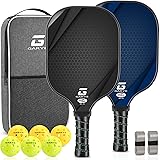
One of pickleball’s most appealing aspects is its minimal equipment requirements, making it easy to get started without a hefty investment. Fundamentally, you’ll need a paddle, a ball, and appropriate court shoes. Finding a court is also becoming increasingly simple as the sport experiences rapid growth across communities, with new facilities appearing regularly.
Choosing Your Pickleball Paddle
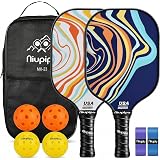
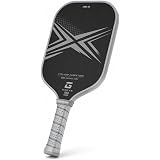
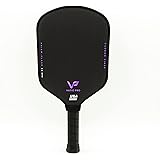
When selecting a paddle, the market offers a wide array of options, but for beginners, some recommendations stand out. It is generally advisable to avoid traditional wooden paddles, as they tend to be heavier and may limit your game as your skills quickly develop. A composite paddle, often made from fiberglass, graphite, or carbon fiber, is a far superior choice for its balance of weight, power, and control. These paddles typically range from $50 to $100 for a quality beginner to intermediate model, providing excellent value and durability for an extended period of play. Should you need a temporary solution, many local pickleball enthusiasts or community centers are often willing to lend equipment, fostering a welcoming environment for newcomers.
Understanding Pickleball Balls
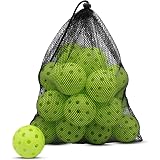
Pickleballs are distinctive, perforated plastic balls designed for specific court surfaces. There are primarily two types: hard, smooth balls and slightly softer, more rubbery balls. The harder balls are generally intended for outdoor play on hard courts, offering a livelier bounce and consistent performance in various weather conditions. Conversely, the softer, more rubbery balls are typically used for indoor play on gym floors, providing a slightly dampened bounce suitable for hardwood surfaces. It is always a good practice to bring a few balls to the court, as they can occasionally crack during vigorous play, and having spares ensures uninterrupted fun.
Selecting the Right Court Shoes
Footwear is a critical, yet often overlooked, piece of equipment that directly impacts both performance and safety. For outdoor play on hard courts, tennis shoes are highly recommended due to their design for multi-directional movement, including crucial lateral support which is essential in pickleball. If you anticipate playing predominantly indoors, shoes designed for sports like basketball or volleyball offer the necessary grip and ankle support for gymnasium surfaces. Running shoes, however, are generally not advisable for pickleball. Their design prioritizes forward-and-back motion, making them unsuitable for the extensive lateral movements common in pickleball and increasing the risk of ankle injuries. Ultimately, your choice of footwear should prioritize stability and support to handle the dynamic nature of the game.
Beyond the core equipment, remember to wear comfortable athletic clothing, hydrate frequently with water, and consider a hat and sunscreen for outdoor sessions to protect against the sun’s rays. Pickleball can be played in singles (1 vs. 1) or doubles (2 vs. 2) format, with doubles being the most common for recreational play, as highlighted in the video.
Understanding the Pickleball Court and Key Rules
To truly grasp **how to play pickleball**, familiarity with the court layout and its specific zones is paramount. The court is divided by a net and several distinct lines, each playing a crucial role in gameplay. Generally, there’s an in-bounds area where the ball is live and an out-of-bounds area where it is a fault, ending the point. Any ball landing on a line is considered in-bounds, which is a key distinction from some other racket sports.
Court Lines and Zones
The outer boundaries of the court are defined by the baseline and the sidelines. Within these, the court features a centerline, which divides the service areas on each side, and the non-volley zone line. This non-volley zone line is particularly unique to pickleball, creating an area that significantly influences strategy and shot selection.
The net, stretching across the middle of the court, serves as the primary barrier. Hitting the ball into the net results in a fault, immediately ending the rally. The fundamental objective of every shot is to successfully clear the net and land within the designated in-bounds area, challenging your opponents to return the ball.
The Non-Volley Zone (The Kitchen)
Often referred to as “the kitchen,” the non-volley zone extends seven feet from the net on both sides. This area is central to pickleball’s distinct character and tactical depth. The cardinal rule of the kitchen is that players cannot hit a volley (striking the ball out of the air before it bounces) while standing in or on the non-volley zone line. This rule prevents players from dominating the net with aggressive overhead slams, thereby promoting longer rallies and more strategic play. It encourages a softer touch and finesse shots, differentiating pickleball from other paddle sports where net play might be more direct and forceful.
A crucial detail to remember is the momentum rule: if you volley the ball while outside the kitchen but your momentum carries you into the zone, it’s considered a fault. However, players are allowed to enter the non-volley zone at any time, provided they do not hit a volley. If the ball bounces first within the kitchen, players may step in and hit it, which is a perfectly legal groundstroke. This nuance often confuses new players, but understanding it is vital for effective court positioning and avoiding unnecessary faults.
The Two-Bounce Rule
A cornerstone of **pickleball basics** and fairness is the two-bounce rule. This mandates that after the serve, the ball must bounce once on the receiving team’s side, and then after the return of serve, it must bounce once on the serving team’s side. Only after these two mandatory bounces have occurred can players begin to volley the ball (hit it out of the air) or continue to let it bounce once before hitting it. This rule ensures that teams cannot immediately rush the net and gain an unfair advantage, promoting longer rallies and strategic approaches to reaching the non-volley zone line.
Understanding Faults
Faults are occurrences that end a point, with the team committing the fault losing that point. As a beginner learning **how to play pickleball**, knowing the most common faults is essential for smooth gameplay. These frequently include hitting the ball into the net, hitting the ball out of bounds (beyond the baseline or sidelines), or allowing the ball to bounce twice on your side of the court before returning it. Other faults, such as stepping into the non-volley zone while volleying, also contribute to the loss of a point. Mastering these basic fault conditions helps new players understand the boundaries of legal play.
Scoring and Strategic Positioning in Pickleball
Pickleball scoring is unique and a key element of the game. Typically, a game is played to 11 points, and a team must win by at least two points. In recreational play, this scoring standard is almost universally applied, though tournament settings may sometimes extend games to 15 or 21 points. A fundamental rule of pickleball is that only the serving team can score points. If the receiving team wins a rally, they do not score a point; instead, they earn the right to serve, which is known as a sideout.
Basic Strategy and Court Positioning
The overarching objective in pickleball is to return the ball successfully one more time than your opponent, thereby winning the rally. While winning a rally doesn’t always translate into a point (unless you’re serving), it’s crucial for gaining or maintaining the serve. Strategically, the most advantageous position for both you and your partner is up at the non-volley zone line. From this forward position, players can hit more forceful and angled shots, minimize open court areas for opponents to target, and react more quickly to incoming balls. It’s a position that leverages both physics and court geometry to maximize offensive and defensive opportunities.
New players often find it challenging to reach the non-volley zone line immediately, as it requires several well-executed shots to transition from the baseline. Some players, especially those with a tennis background, may initially prefer to stay near the baseline, hitting groundstrokes. While this is a valid choice of playing style, it’s generally observed that the most successful and skilled pickleball players actively strive to get to and maintain their position at the non-volley zone line. This forward court presence is a hallmark of advanced pickleball strategy, offering superior control and offensive potential.
Starting Positions and Switching
Understanding starting positions for all four players and how they switch is crucial for mastering **pickleball basics**. At the start of a point, both players on the serving team must position themselves behind the baseline. This is due to the two-bounce rule, which ensures the first return will bounce. The server’s partner stays back to avoid inadvertently volleying the return. The player on the right side of the court is always the first to serve at the beginning of a game and after every sideout. The team decides who starts on the right, and subsequent score and switches dictate positions.
When the serving team scores a point, the serving players switch sides, but the same player continues to serve. If they lose a point, they do not switch sides; instead, the serve passes to their partner. Once the second server loses a point, a “sideout” occurs, and the serve goes to the opposing team. This dynamic switching and serving sequence ensures fair play and keeps both partners engaged in the serving process.
For the receiving team, the returner stands behind the baseline, ready to receive the serve, while their partner positions themselves up at the non-volley zone line. The returner’s partner can be at the kitchen line because they are not allowed to hit a volley until after the two-bounce rule is satisfied. This allows them to be in the most advantageous position immediately to make a play on the third shot of the rally. The receiving team does not switch sides regardless of who wins the point; they maintain their positions, with the designated returner always starting behind the baseline.
The First Server Exception Rule
To prevent one team from dominating the game from the outset, a special rule applies only to the very first service turn of a game. For the team that begins serving, only one player will have the opportunity to serve. Once that player loses a point, a sideout occurs, and the serve immediately goes to the opposing team. From then on, both players on each team will get a chance to serve during their respective service turns, as described previously. This exception helps to balance the game and give the receiving team an earlier opportunity to gain the serve, contributing to the competitive yet fun nature of **pickleball basics**.
Understanding Pickleball Scoring in Practice
Before initiating each point, the server is responsible for calling out the score. This score consists of three numbers: the serving team’s score, the receiving team’s score, and the server’s number (either a ‘1’ for the first server in the turn or a ‘2’ for the second server). For example, if your team has 4 points, the opponent has 6, and you are the first server of your team’s turn, you would call “4-6-1.”
An important detail to recall is the unique scoring call at the very beginning of a new game: “0-0-2.” This reflects the first server exception rule, where the first team to serve effectively “skips” their first server’s partner, meaning only one server will serve during that initial turn. After this first sideout, subsequent scoring calls will reflect the standard two-server system (e.g., “0-0-1” when the opposing team serves for the first time). Mastering this scoring system is fundamental to understanding **pickleball basics** and maintaining smooth gameplay.
Mastering the Serve: Key Rules and Techniques
The serve in pickleball is a unique shot with specific rules designed to limit its power and ensure fair play. When serving, both feet must start behind the baseline, and contact with the ball cannot occur until after it has been struck. This foot fault rule is crucial for maintaining a legal serve. Although both forehand and backhand serves are permitted, the forehand serve is by far the most commonly used, almost to the exclusion of others in recreational play.
The Volley Serve
The volley serve involves tossing the ball and striking it out of the air. To be considered legal, the volley serve must adhere to three primary requirements:
- Your hitting arm must be moving in an upward arc when you strike the ball. This ensures an underhand motion, limiting the power of the serve.
- The highest point of your paddle head must not be above the highest part of your wrist at the moment of contact. This further controls the trajectory and speed of the serve.
- Contact with the ball must be made below the waist. While the exact definition of the waist can be ambiguous, the navel is widely accepted as the reference point for this rule.
The Drop Serve
As an alternative to the volley serve, the drop serve offers a more forgiving option for many new players. With a drop serve, you simply release the ball from your hand and allow it to bounce before striking it with your paddle. The strict requirements of the volley serve (upward arc, paddle below wrist, contact below waist) do not apply to the drop serve. Instead, the rules are simpler:
- There are no restrictions on how many times you let the ball bounce, though one bounce is typically recommended to optimize contact height.
- The ball can bounce anywhere – behind the baseline, on the line, or even inside the court. The key is simply that it must bounce before contact.
- The ball must be released without any upward or downward force; it should be a pure drop.
While the volley serve often allows for a higher contact point, potentially leading to a more effective shot with less upward trajectory needed to clear the net, many new players find the drop serve easier to time and execute consistently. For beginners, consistently getting the ball in play is often more important than maximizing its power. Therefore, experimenting with both serve types to discover what works best for your comfort and consistency is a sensible approach when learning **pickleball basics**.
The Kitchen for Questions: Your Pickleball Q&A
What is pickleball?
Pickleball is a paddle sport that combines elements of tennis, badminton, and ping-pong. It is known for being easy to learn and enjoyable for people of all ages.
What basic equipment do I need to start playing pickleball?
To begin playing pickleball, you will primarily need a composite paddle, a perforated plastic pickleball, and appropriate court shoes for stability and support.
What is the ‘non-volley zone,’ also called ‘the kitchen,’ in pickleball?
The ‘kitchen’ is an area seven feet from the net on both sides where players cannot hit the ball out of the air (volley). This rule promotes strategic play and softer shots.
What is the two-bounce rule in pickleball?
The two-bounce rule dictates that after the serve, the ball must bounce once on the receiving team’s side, and then after the return of serve, it must bounce once on the serving team’s side before players can hit volleys.
How do you score points in pickleball?
In pickleball, games are usually played to 11 points, and you must win by at least two points. Only the serving team can score points; if the receiving team wins a rally, they earn the right to serve.