Mastering the fundamental **pickleball rules** is the crucial first step for any aspiring player, ensuring a smooth and enjoyable introduction to this incredibly popular sport. As beautifully demonstrated in the accompanying video, understanding the game’s core mechanics allows participants to quickly move from observer to active player. This guide expands on those essential elements, providing a comprehensive written resource to complement your visual learning and deepen your comprehension of pickleball gameplay.
What Exactly is Pickleball? A Racket Sport Hybrid Explained
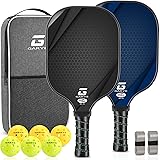
Pickleball is often described as a vibrant cross between tennis, badminton, and ping-pong, forging a unique athletic experience. This innovative sport blends the best aspects of its predecessors, offering an engaging challenge without the steep learning curve typically associated with racket games. Unlike the heavy rackets used in tennis or the delicate bats of ping-pong, pickleball utilizes a solid paddle that is perfectly sized for quick, controlled movements.
The ball itself is another distinguishing feature, resembling a wiffle ball with its perforated, lightweight plastic construction. This design inherently slows down play, making rallies longer and more accessible for players of all ages and skill levels. The court, as the video highlights, is remarkably compact; it measures just 30% of a standard tennis court, making it an incredibly efficient use of space. Indeed, it is common to see two, or even four, pickleball courts converted from a single tennis court, maximizing participation and fostering a vibrant community spirit.
Navigating the Pickleball Court: Key Zones and Their Purpose
Understanding the pickleball court’s layout is paramount, as specific rules govern play within each distinct area. The court is neatly divided by a net, similar to tennis, creating two halves for opposing players or teams. Each half features a baseline, marking the back boundary, and sidelines, defining the width of the playing area.
Crucially, two service courts are delineated within each half, forming designated target areas for serves. Perhaps the most unique and strategically significant area is the Non-Volley Zone, universally known as the “kitchen.” This zone extends seven feet from the net on both sides, spanning the full width of the court. The kitchen represents a strategic paradox; players must avoid volleying the ball while standing within it, yet often benefit from positioning close to its edge to deliver powerful shots. Violating this rule, such as striking the ball in the air while any part of your body is in the kitchen, results in a lost point.
Serving Up Success: Mastering the Pickleball Serve
Every pickleball point begins with a serve, and adhering to the specific serving rules is vital for fair play. Unlike the overhead power serves common in tennis, pickleball requires an underhand motion, where the paddle must make contact with the ball below the server’s waist. The serve must also be directed diagonally across the net, landing within the opponent’s designated service court, a marked area that acts as your precise target.
Only one serve attempt is permitted per point; a fault means losing the serve immediately. This distinct rule ensures that raw power is less critical than precision and strategic placement, inviting a broader range of athletic abilities to excel. A common fault is failing to land the ball within the designated service box, which can be frustrating but easily corrected with practice. Another serve fault involves the ball’s contact point being above the waist, which goes against the underhand serving convention.
The Essential Two-Bounce Rule: Setting the Pace of Play
A cornerstone of pickleball strategy and accessibility is the unique “two-bounce rule,” often cited as a key differentiator from other racket sports. This rule dictates that the ball must bounce once on each side of the court before either team can hit it as a volley (without letting it bounce). Specifically, the server must allow the return of their serve to bounce once before striking it. Conversely, the receiving team must also let the initial serve bounce before returning it.
This rule inherently fosters longer rallies and encourages more strategic play from the baseline, rather than immediate aggressive net play. It acts as a mandatory buffer, preventing players from rushing the net too early and dominating points with power volleys. While the initial serve (first shot) and the return of serve (second shot) must both bounce, after these initial two shots, players are free to hit the ball either as a volley or after a bounce, provided they are outside the kitchen.
The Kitchen Conundrum: Understanding the Non-Volley Zone
The Non-Volley Zone, or “kitchen,” introduces a fascinating strategic dimension, distinguishing pickleball from its racket sport relatives. Players are strictly prohibited from hitting the ball in the air (volleying) while they are standing within this seven-foot zone near the net. Violating this rule, such as by stepping on the kitchen line during a volley, results in losing the point.
However, players are perfectly allowed to enter the kitchen to retrieve a ball that has already bounced within the zone. After hitting the ball from inside the kitchen, the player must immediately exit before another volley attempt. This rule prevents aggressive players from camping at the net and dominating rallies with powerful, close-range volleys, thus promoting a more balanced and accessible game. It is a common pitfall for new players, but with practice, it becomes a natural part of game strategy, encouraging thoughtful shot placement and footwork.
Deciphering Points: How to Win and Lose in Pickleball
Winning points in pickleball revolves around your opponent’s errors or your strategic shot-making that they cannot return legally. You secure a point when your opponent commits any of the following infractions:
- Failing to return your serve or shot legally (e.g., hitting the ball out of bounds).
- Hitting the ball into the net on their serve or return.
- Volleying the ball while standing within the Non-Volley Zone (the kitchen).
- Allowing the ball to bounce more than once on their side before returning it.
- Hitting your serve or the return of your serve directly (violating the two-bounce rule).
- Making contact with the ball above the waist during their serve.
- Failing to serve the ball into the correct diagonal service box.
Conversely, you lose a point if you commit any of these same errors. For instance, if you serve the ball and it lands outside the designated service area, the serve is deemed a fault, and you lose the point. Similarly, if you serve, and then immediately volley the opponent’s return without letting it bounce, you are penalized for violating the two-bounce rule, and the point is awarded to your opponent. Understanding these pathways to victory and defeat allows players to refine their technique and strategic decisions.
Mastering the Pickleball Scoring System
The scoring system in pickleball, while unique, is straightforward once understood. Only the serving team can score points. If the serving team wins a rally, they earn a point and continue to serve, but they must switch sides of the court. If the receiving team wins the rally, no point is awarded, but the serve passes to them, a concept known as a “side out.” This dynamic scoring mechanism often means scores can remain low for a while until one team gains momentum on their serve.
Games are typically played to 11 points, but a team must win by a margin of at least two points. So, if the score reaches 11-10, play continues until one team achieves a two-point lead, such as 12-10 or 13-11. Some variations exist where games are played to 15 or 21 points, particularly in more competitive or friendly settings. A common tip for new servers is to remember: if your score is even, you serve from the right side of the court; if your score is odd, you serve from the left. This simple rule helps maintain consistency and proper positioning throughout the game.
Why Pickleball’s Popularity Continues to Soar
The meteoric rise of pickleball is not merely a fleeting trend; it is a testament to the sport’s inherent design that prioritizes accessibility and fun. Its incredibly short learning curve is a primary driver of its success; unlike tennis, which can demand years of dedicated practice to achieve enjoyable gameplay, pickleball often allows beginners to engage in competitive rallies within a single week. This rapid progression fuels enthusiasm and makes the sport highly rewarding from the outset.
Moreover, pickleball inherently fosters a vibrant social environment. The smaller court size means players are in closer proximity, facilitating communication and camaraderie. The slower pace, due to the lightweight, perforated ball, encourages longer rallies and strategic exchanges rather than sheer power, making it an excellent sport for socializing while staying active. The ease of setting up temporary courts, often by converting tennis or badminton courts, further contributes to its widespread adoption and community integration. For anyone seeking a new, engaging, and social athletic pursuit, learning **how to play pickleball** offers an immensely satisfying experience that can be embraced quickly and enjoyed for years to come.
Serve Up Your Pickleball Questions
What exactly is pickleball?
Pickleball is a vibrant racket sport that blends elements of tennis, badminton, and ping-pong. It uses a solid paddle and a lightweight, perforated wiffle ball, making it easy to learn.
What is the ‘kitchen’ in pickleball?
The ‘kitchen’ is a unique area on the court called the Non-Volley Zone, extending seven feet from the net on both sides. Players are not allowed to hit the ball in the air (volley) while standing inside this zone.
How do you serve in pickleball?
Every pickleball point starts with an underhand serve, where the paddle must contact the ball below the server’s waist. The serve must be directed diagonally across the net into the opponent’s designated service court.
What is the ‘two-bounce rule’?
The ‘two-bounce rule’ means that after the serve, the ball must bounce once on the receiving team’s side and then once on the serving team’s side before either team can hit it without letting it bounce (a volley).